
Travelers visiting Bali for the first time, or even those who have visited multiple times, may encounter various health issues. A holiday in Bali should be an enjoyable experience; however, long journeys, weather changes, packed itineraries, sleep deprivation, and digestive upsets can leave travelers feeling exhausted or unwell.
In certain situations, some travelers consider IV drip therapy as an option for hydration support without having to leave their hotel or villa.
So, Is IV Drip Therapy Safe?
The answer depends on the individual’s condition, the type of treatment administered, and how the procedure is performed. An IV drip is a medical procedure requiring patient assessment, competent medical personnel, sterile equipment, appropriate treatment selection, and monitoring throughout the process.
When Do Travelers Need IV Drip Therapy?
Not every traveler feeling tired or low on energy requires an IV drip. Mild dehydration, for instance, can often be managed by consuming enough fluids, resting, and taking care of one’s body.
However, in certain situations, IV hydration may be considered, particularly when someone has experienced significant fluid loss or struggles to meet hydration needs orally. Persistent vomiting and diarrhea, for example, can make it difficult to replenish lost fluids simply by drinking.
This can also occur in travelers suffering from the digestive ailment commonly known as “Bali belly.” In such cases, maintaining hydration is a crucial part of recovery.
What Makes IV Drip Therapy Safe?
The safety of an IV drip is determined not only by the fluids administered but also by the entire process, before, during, and after the treatment.
Patient Condition Assessment
Before treatment, medical personnel should have a comprehensive understanding of the patient’s condition. Information regarding symptoms, medical history, allergies, current medications, and other health conditions helps determine whether the treatment is suitable for the patient.
This is particularly important for travelers with kidney disease or heart disorders, those taking specific medications, pregnant women, or individuals with a history of adverse reactions to medical treatments.
Sterile Equipment
Sterility is a crucial aspect of IV drip procedures, as the process involves direct access to the bloodstream. Ensure that you use sterile equipment to minimize the risk of infection.
These safety principles must be upheld even when the treatment is administered outside a clinical facility, such as at a traveler’s hotel or villa.
Proper Composition and Dosage
A higher quantity of vitamins or specific ingredients does not always equate to better results. The composition and dosage of the treatment must be tailored to the patient’s specific condition and needs.
Travelers also have the right to know exactly what is in the treatment and why those specific components were chosen. A professional service provider should be able to explain the treatment transparently without making exaggerated promises about the results.
What Are the Potential Risks?
Possible complications can include pain, bruising, swelling, irritation around the injection site, or inflammation of the vein. Infection is another potential concern if appropriate hygiene and injection safety procedures are not followed.
Some people may also experience an adverse or allergic reaction to a medication or other substance administered through the IV.
These risks do not mean that IV treatment should be avoided altogether. Instead, they highlight why travelers should choose a service that treats IV therapy as a medical procedure rather than simply a wellness convenience.
Who Should Be More Cautious About IV Therapy?
Certain travelers may require additional assessment before receiving an IV drip.
This includes people with kidney disease, heart conditions, significant liver problems, known allergies, or complex medical histories. Pregnant travelers and people taking prescription medications should also discuss their circumstances with a qualified healthcare professional before treatment.
Travelers should also be cautious if their symptoms are severe, unusual, or getting worse. An IV drip should never delay appropriate medical evaluation when symptoms could indicate a more serious condition.
What about IV Drips for “Bali Belly”?
Due to weather changes or a packed itinerary, many travelers experience digestive issues such as vomiting and diarrhea.
In certain situations, IV hydration may be considered when a person struggles to replace lost fluids by drinking. However, an IV drip only supports hydration needs and does not address the underlying cause of the digestive issue.
Travelers should seek immediate medical attention if they experience blood in their vomit or stool, severe abdominal pain, persistent vomiting, fainting, confusion, severe weakness, difficulty breathing, or a worsening condition.
Home-Service IV Drips: A Convenient Option for Travelers
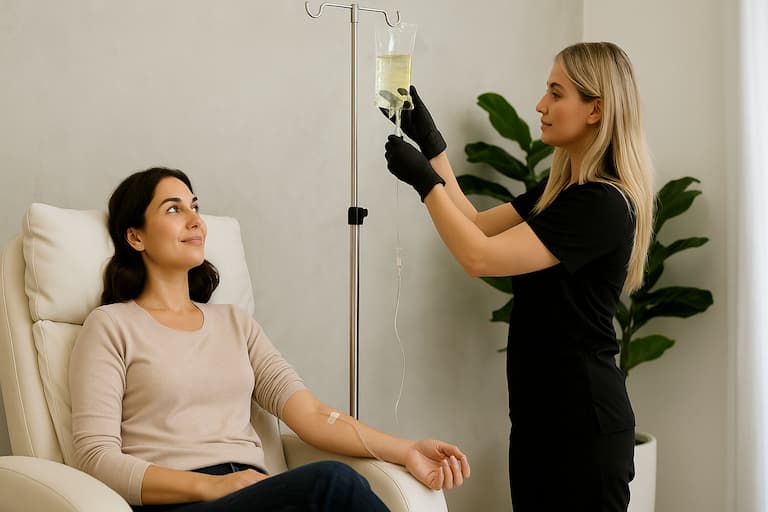
One advantage of mobile IV drip services in Bali is that travelers do not need to leave their hotel or villa while feeling unwell.
Medical professionals can come directly to the traveler’s location, making the treatment process more convenient, especially for those suffering from weakness, nausea, diarrhea, or fatigue.
However, the treatment location does not automatically determine safety standards. Treatments performed in hotels or villas must still adhere to proper medical protocols.
Patient assessment, the use of sterile equipment, proper IV insertion procedures, monitoring during treatment, and the ability to recognize conditions requiring further care remain crucial factors.
IV drip therapy can be a hydration support option for travelers in specific situations, particularly when fluid intake via drinking is difficult. However, since IV drips are a medical procedure, safety must remain the top priority.
For travelers in Bali wishing to receive an IV drip without leaving their hotel or villa, Fast Drip Bali offers home-service IV drip treatments, allowing the procedure to be performed right where you are staying. Contact Fast Drip Bali to find treatment options tailored to your needs.
Frequently Asked Questions
1. Are IV drips safe for travelers in Bali?
IV drips can be safe if administered by competent medical professionals using appropriate treatments and correct medical procedures.
2. Can IV drips be administered in a hotel?
Yes. Home-service options allow travelers to receive treatment directly in their hotel, villa, or other suitable accommodation.
3. What are the risks of IV drips?
Risks may include pain, bruising, swelling, blood vessel irritation, infection, or a reaction to the treatment ingredients.
4. When should you go to the hospital?
Seek immediate medical attention if you experience severe symptoms such as fainting, difficulty breathing, bleeding, confusion, or intense pain.

Certified doctor that dedicated to providing personalized and patient-centered care. Committed to delivering personalized medical care with the highest standards of safety and professionalism.
STR: PH00000071318974